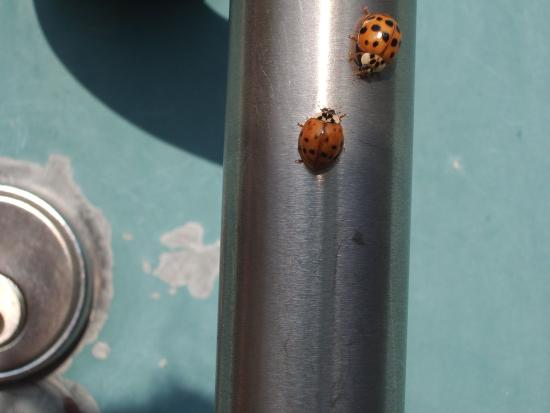
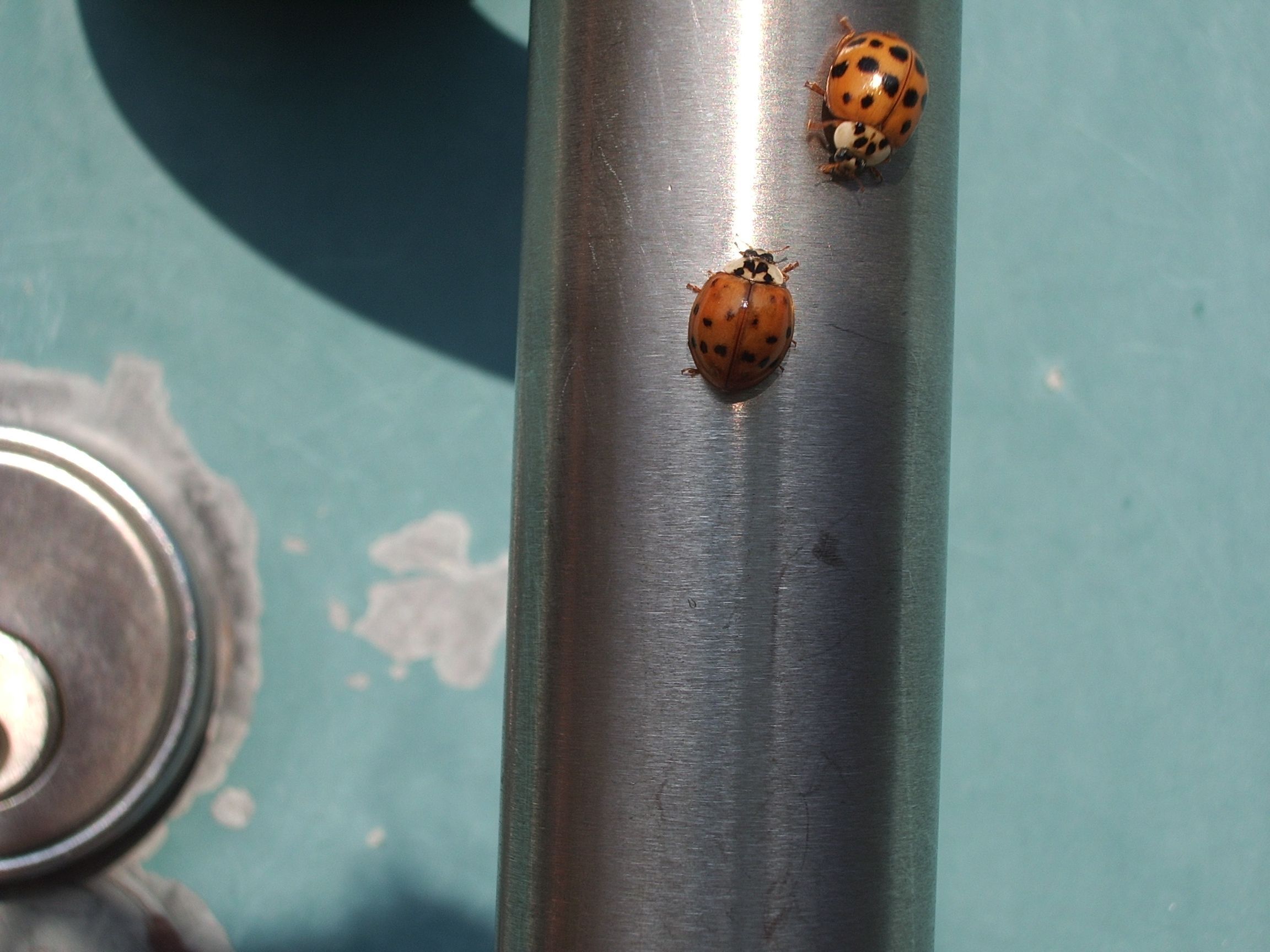
A new study led by researchers at 小黄片视频 and Michigan State University finds that populations of lady beetles, important natural predators of crop pests, have declined substantially over the past three decades in a Midwestern agricultural landscape. The research, published in , analyzed 31 years of insect monitoring data collected at the (KSB LTER) in southwestern Michigan. Across that period, the overall lady beetle community declined by 39 percent. Native species experienced the steepest losses, declining by 77 percent, while introduced species declined by 23 percent. Lady beetles are widely recognized as beneficial insects because they consume aphids and other agricultural pests. As their populations decline, the ability of agricultural ecosystems to naturally suppress pest outbreaks may also weaken.

鈥淚nsect declines often get discussed as a single global trend, but what we see on the ground is much more complicated,鈥� said Christie A. Bahlai, PhD, Associate Professor of Biological Sciences and Co-Director of The Environmental Science and Design Research Institute at 小黄片视频. 鈥淓ven within this closely related group of insects, different species are changing in different ways and at different times.鈥�
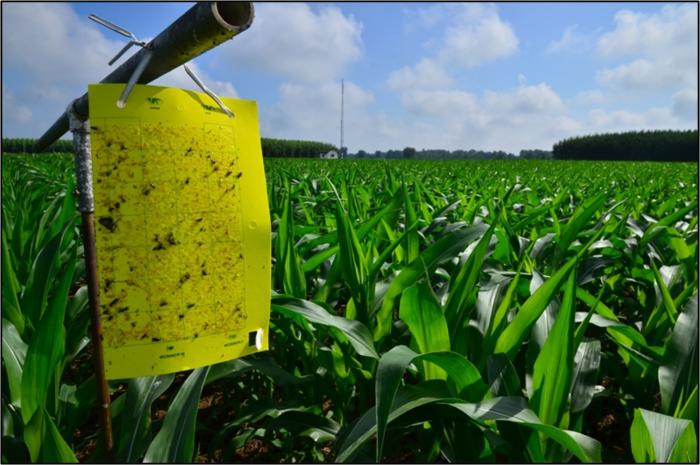
The study draws on one of the longest continuous datasets on insect predators in North American farmland. Since 1989, scientists at the W.K. Kellogg Biological Station have monitored insects across a landscape-scale agricultural experiment that includes annual crops such as corn, soybean, and wheat; perennial systems including alfalfa, switchgrass, and poplar; and nearby forest habitats. Here, researchers collect lady beetles using yellow sticky traps deployed weekly throughout the growing season.
For the new analysis, the team examined data from 1993 through 2023 across ten different plant communities spanning agricultural and forest habitats. The long-term record revealed that population trends varied widely across species and habitats. Lady beetle communities in annual crop fields showed the largest swings in abundance over time, while those in perennial crops followed similar but less pronounced patterns. In nearby forests, populations were more stable or declined gradually. Several once-common native species have become so rare that they were not detected in annual sampling in most of the last five years, including one of the most common species in North America, the convergent lady beetle (Hippodamia convergens).
鈥淭hese long-term datasets are incredibly valuable because insect populations naturally fluctuate from year to year,鈥� Bahlai said. 鈥淲ithout decades of data, it can be very difficult to tell whether a population is truly recovering or quietly continuing to decline.鈥� The findings also challenge assumptions about invasive species. Introduced lady beetles were once thought likely to thrive in human-altered environments because of their adaptability. However, the study shows that even these species, including the 14-spotted lady beetle (Propylea quatuordecimpunctata) are now declining. 鈥淲e often assume invasive species will be resilient to environmental change,鈥� Bahlai said. 鈥淏ut in this system, the pressures affecting native species appear to be strong enough to affect introduced species as well, without leading to a recovery of the native community.鈥�

Over the course of the study, the overall potential of the lady beetle community to suppress pests, such as aphids, declined by 42 percent. The loss of multiple species may reduce the redundancy that helps ecosystems remain stable when conditions change. 鈥淥ur results suggest that agricultural landscapes may be losing some of their natural pest control capacity,鈥� said , University Distinguished Professor of .
The research also highlights the importance of long-term scientific infrastructure. The dataset comes from one of the core experiments at the Kellogg Biological Station Long-Term Ecological Research Site, a program supported by the that funds decades-long ecological studies. 鈥淟ong-term experiments like this are rare but incredibly valuable,鈥� Bahlai said. 鈥淭hey allow us to see ecological change unfolding over real time scales. Without that sustained investment, many of these patterns would remain invisible.鈥�
Landis led field data collection for this experiment for two decades. Bahlai joined the project as a junior scientist in 2012 and recently assumed leadership of the study, continuing a multidecade collaboration focused on understanding how agricultural landscapes shape biodiversity and ecosystem services.